Asymmetry of Cerebral Blood Flow Velocity with
Processing of Facial Images During Head Down Rest
Philip C. Njemanze
Philip C. Njemanze
Noninvasive Neurocybernetic Flow Lab, Chidicon Medical
Center, Owerri, Nigeria.
CONCLUSION
The present study demonstrated that HDT alters cerebral lateralization for object
and facial stimuli, with females showing opposite to male tendencies.
METHODS
INTRODUCTION: Facial expression just
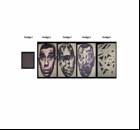
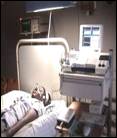
like language is crucial for communication among individuals. METHODS: Transcranial Doppler
(TCD) ultrasonography was used to monitor mean blood flow velocity in both
middle cerebral arteries during processing of facial images before (Pre-HDT),
during (6 hrs-HDT and 24 hrs-HDT) and after (Post-HDT) at -6 degrees for 24 hours of head-down tilt
(HDT) in 16 (8 male and 8 female) subjects. Laterality index was assessed as
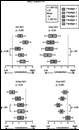
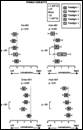
side-to-side differences during each stimulus relative to baseline. RESULTS: For males, in Pre-HDT, both object and faces were
differentially right lateralized (p<0.001), but were left lateralized in
females. In males, at 6hrs-HDT, both object and faces were left lateralized
(p<0.05), but right lateralized in females (p<0.001). At 24hrs-HDT, both
males and females were left lateralized (p<0.05). In immediate Post-HDT
condition, both males and females remained left lateralized for all tasks
(p<0.05).
HDT with TCD Monitoring
Lateralization Pattern


Male
Female
Facial Paradigms 1-5
Statistics: Results were given as mean±SD and/or mean±SE where applicable.
A one way analysis of covariance (ANCOVA) for repeated measures was
performed.